Race Day Nutrition for Beginners: 5 Essential Rules to Fuel Your First Race
All that training can unravel without the right fuel. Five simple race-day nutrition rules every beginner runner needs before the starting gun.
Training for your first race is a major accomplishment. You’ve logged the miles, built up your stamina, and picked out your race-day outfit. However, all that hard work can quickly unravel if you don't properly fuel your body.
Proper race-day nutrition isn't about complex math or restrictive diets—it’s about giving your muscles the easy-to-access energy they need to cross the finish line feeling strong. Here are five simple, essential nutrition rules every beginner runner needs to know.
1. Carb-Loading: Build Energy Before the Start
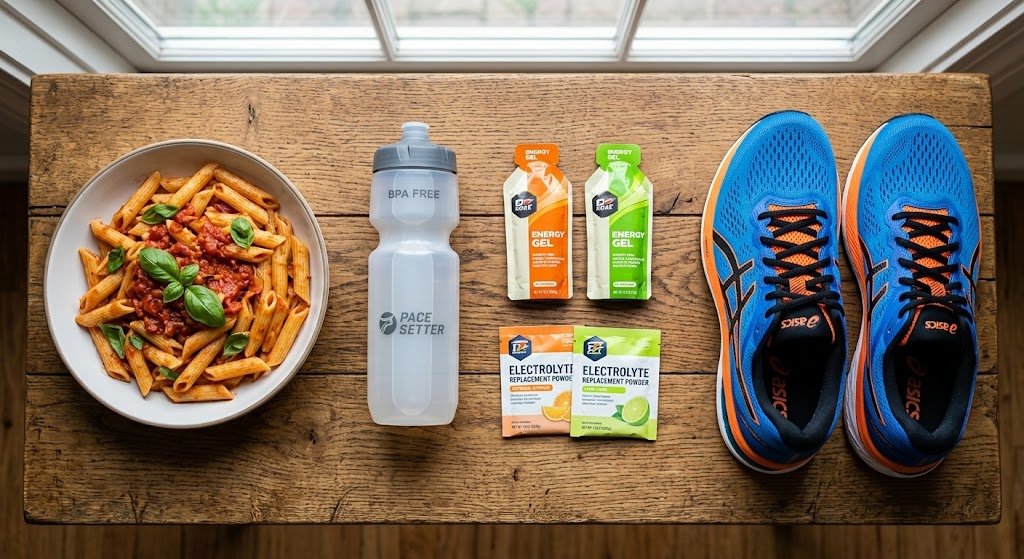
Carbohydrates are your body’s primary and most efficient source of fuel during high-intensity endurance exercise. When you eat carbs, your body breaks them down into glucose and stores them in your muscles and liver as glycogen.
When to start: 1 to 3 days before race day.
What to eat: Focus on easily digestible carbohydrates like pasta, white rice, oatmeal, bagels, and bread.
Why it matters: Increasing your carbohydrate intake in the days leading up to your race tops off your muscle glycogen reserves, giving you a full fuel tank before you even step up to the starting line.
2. Pre-Race Hydration: Sip Regularly
Proper hydration starts long before the starting gun fires. Arriving at the start line already dehydrated forces your heart to work harder to pump blood, drastically lowering your endurance.
Timing: Begin focusing on fluid intake 2 to 4 hours before the race begins.
Technique: Sip water steadily throughout the morning rather than gulping down large amounts right before the start.
Pro-Tip: Drinking too fast can lead to an uncomfortable, sloshing stomach or frequent bathroom stops right before your race starts. Listen to your body and sip calmly.
3. Energy Gel Timing: Fuel On the Run
During longer efforts, your glycogen stores will eventually run low. Energy gels offer a fast, concentrated dose of simple carbohydrates that absorb quickly into your bloodstream to keep your energy steady.
Frequency: Consume one gel every 45 to 60 minutes during the race to maintain steady energy levels.
Practice: Always test energy gels during your long training runs so your digestive system gets used to processing them under stress.
Crucial Rule: Always wash energy gels down with plain water rather than a sugary sports drink. Taking a gel with a sports drink concentrates too much sugar in your stomach at once, which often causes cramps.
4. Drinking On the Run: Sip Smarter at Aid Stations
Aid stations along the race course offer both plain water and electrolyte-rich sports drinks. Striking a balance between both is key to avoiding fatigue and muscle cramping.
Alternate fluids: Rotate between plain water and electrolyte drinks across the different aid stations along the course.
Prevent issues: Electrolytes (like sodium and potassium) help prevent dehydration, heat cramps, and electrolyte imbalance caused by sweating.
Pacing your drinks: Take smaller, controlled sips as you walk or slow down through the aid stations to avoid swallowing excess air or choking while moving.
5. Test in Training: Nothing New on Race Day
This is the golden rule of endurance running: Never try new foods, drinks, or energy gels on race morning.
Why it’s vital: Your stomach is particularly sensitive on race day due to a combination of nerves and diverted blood flow. Introducing a brand-new energy chew, exotic breakfast ingredient, or unfamiliar drink can trigger severe gastrointestinal distress.
The rule: Every meal, drink, and gel you use on race day should be something you have successfully tested multiple times during your long training runs.
Properly fueling your body doesn't need to be overwhelming. By topping off your carb stores before the race, sipping water regularly, timing your energy gels, balancing electrolytes, and strictly sticking to proven foods, you setup your body for peak performance. Honor your training, listen to your stomach, and enjoy every step of your race!
As an Amazon Associate I earn from qualifying purchases. Links in this article are affiliate links — you pay the same price, and it keeps our testing independent.