The Mileage Trap: Why Tracking Running Shoe Wear Is essential for Performance and Injury Prevention
Midsole foam degrades silently long before the upper looks worn. Here is how to track mileage, read the warning signs, and retire your running shoes before they retire you.
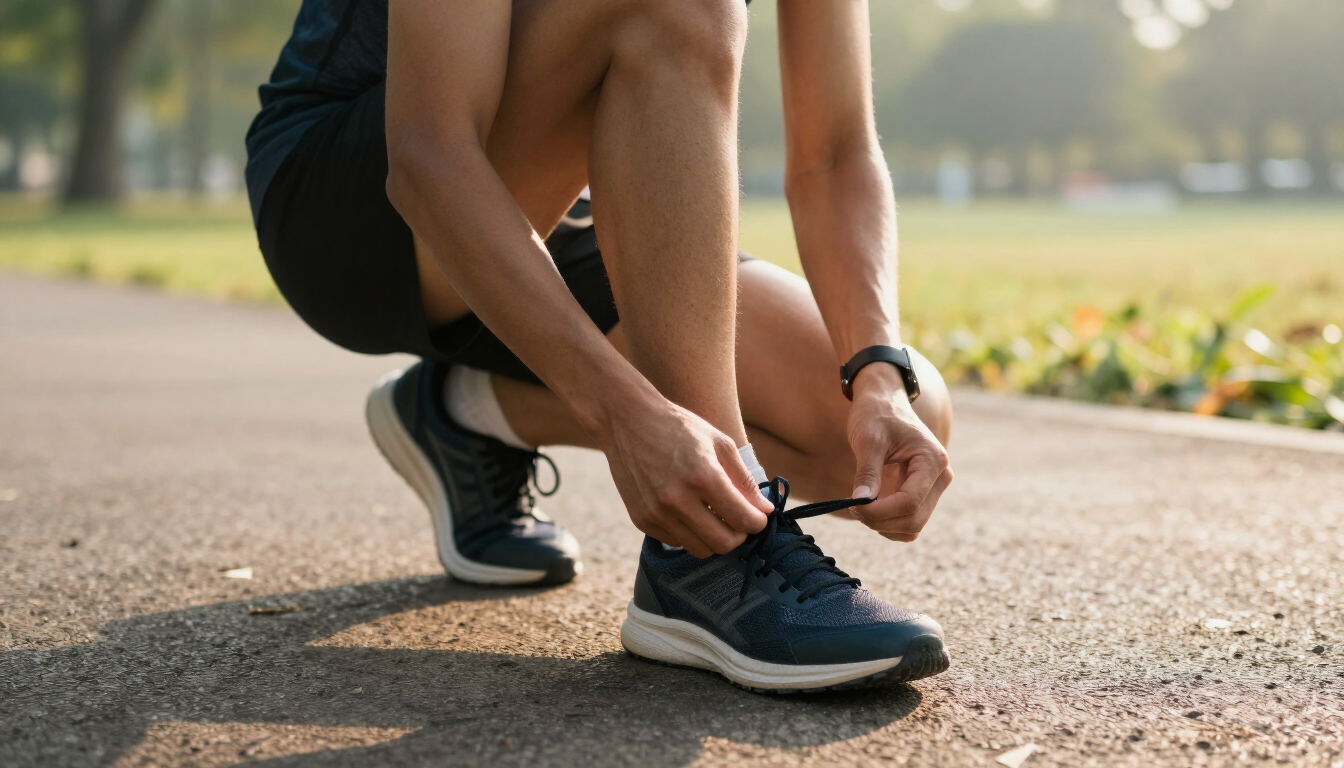
For long-distance runners, every marathon cycle, 50K build-up, or high-volume training block demands thousands of repetitive foot strikes. Every step sends forces roughly 2.5 to 3 times your body weight surging through your ankles, shins, knees, and hips. Modern running shoes are engineered marvels designed to absorb those ground impact forces and return energy, propelling you forward mile after mile. However, running shoes do not last forever.
While a shoe’s upper fabric might still look pristine on top, the microscopic cells within the midsole foam slowly collapse under cumulative loading. This progressive degradation is a silent performance killer and a primary driver of overuse injuries. Understanding why and how to track your running shoe wear — along with recognizing the critical warning signs of an expired midsole — is one of the most effective ways to safeguard your health and optimize performance.
Why Long-Distance Runners Must Track Shoe Wear
1. Protection Against Progressive Impact Fatigue
Modern midsoles rely on advanced chemical compounds like Ethylene-Vinyl Acetate (EVA), Thermoplastic Polyurethane (TPU), and Polyether Block Amide (PEBA / “super foams”). Over time, repeated compressive loads break down the air pockets and chemical cross-links in these foams. Research shows that standard running shoes lose approximately 25% of their shock absorption capabilities after 50 miles and up to 33% by 100 to 150 miles. By 300 to 500 miles, the structural integrity drops significantly, forcing your muscles, tendons, and joints to absorb higher peak ground reaction forces.
2. Safeguarding Running Biomechanics and Gait Efficiency
As shoe foam degrades unevenly — often accentuating a runner’s natural pronation or heel strike pattern — the platform becomes destabilized. Running on a tilted or compressed base forces your kinetic chain to compensate, altering your knee alignment, hip mechanics, and ankle stiffness. These unnatural gait adjustments lead to rapid muscle fatigue and inefficiency during long runs.
3. Preserving Running Economy and Energy Return
Performance in long-distance running hinges on running economy: the energy required to maintain a specific speed. Intact midsole foam acts like a spring, storing and returning mechanical energy. Once the foam undergoes permanent compression set (flatness), that mechanical advantage vanishes. Your legs must work significantly harder to produce the same propulsive force, leading to earlier exhaustion during workouts and races.
How to Track Your Running Shoe Wear Effectively
Tracking mileage turns guesswork into precise maintenance. Standard daily trainers typically last between 300 and 500 miles (480–800 km), while lightweight tempo shoes or carbon-plated race shoes wear out faster, often between 150 and 300 miles.
| Shoe Type | Expected Lifespan | Primary Function |
|---|---|---|
| Daily Trainers | 300 – 500 miles (480 – 800 km) | High durability, maximum general impact protection |
| Tempo / Workout Shoes | 250 – 370 miles (400 – 600 km) | Responsive, firmer foam tuned for faster speeds |
| Carbon Super-Shoes | 120 – 250 miles (200 – 400 km) | Ultra-high PEBA energy return, lower foam longevity |
| Trail Shoes | 310 – 430 miles (500 – 700 km) | Reinforced rubber outsoles for soft or technical terrain |
The 3 Best Methods for Logging Mileage
1. Automatic Tracking via Running Apps & Watches
Platforms like Garmin, Strava, and Nike Run Club offer gear tracking features, or you can use StrideTrack for a more straightforward, no-frills way to track both runs and shoe usage while avoiding a monthly subscription fee. These tools automatically aggregate distance per pair and alert you at retirement thresholds.
2. Physical Marker Method
Write the starting date or initial target retirement mileage inside the tongue or on the midsole frame with a permanent marker. If you average 30 miles per week in a single pair, you know that shoe will reach its 400-mile limit in roughly 13 to 14 weeks.
3. Dedicated Shoe Rotation Tracking
Rotating between two or more different pairs of shoes gives the midsole foam 24 to 48 hours to fully decompress and recover between efforts. Studies (such as Malisoux et al., 2015) demonstrated that runners who rotated multiple shoes concurrently had a 39% lower risk of running-related injuries due to varied tissue loading.
5 Critical Warning Signs Your Running Shoes Are Worn Out
While tracking mileage gives you an objective baseline, body weight, terrain, and running technique dictate exact breakdown speed. Keep a close eye out for these 5 telltale warning signs:
1. Unexplained Aches and Niggles (Shin Splints, Knee, or Achilles Pain)
The most common indicator of dead shoes is a sudden onset of joint or soft-tissue discomfort that appears without a sudden increase in training volume or intensity. When midsole foam loses its dampening capacity, ground impact shock travels directly up the tibia, patellar tendon, and plantar fascia. If you wake up with stiff Achilles tendons or dull knee soreness after easy runs, check your shoe logs immediately.
2. Deep Creasing and “Dead” Midsole Response
Inspect the lateral side of your shoe’s midsole. Heavy, horizontal compression wrinkles indicate that the foam matrix has experienced permanent structural collapse. Perform the press test: press your thumb firmly into the center of the midsole from the inside or bottom. A fresh shoe will feel resilient and rubbery; an exhausted shoe will feel stiff, dense, and board-like. On the road, this translates to a dull, flat feeling with zero spring.
3. Asymmetrical Tread Wear Patterns
Flip your shoes over and examine the outsole rubber. It is normal for tread to wear down slightly in high-impact zones, but excessive wear — such as smooth patches where rubber has worn completely away to expose the underlying foam — is a major red flag. Severe wear along the inner edge (overpronation) or outer border (supination) drastically skews your alignment upon landing.
The Flat Table Test: Place your shoes side-by-side on a level table at eye height. If either shoe tilts inward, outward, or wobbles when gently tapped, the platform is uneven and should be retired immediately.
4. Loss of Upper Structure and Heel Counter Stability
The upper unit of the shoe holds your foot centered over the cushioned platform. Over hundreds of miles, mesh materials stretch out and heel counters (the rigid cup wrapping the back of your heel) lose their stiffness. If you notice your foot sliding over the footbed during turns, heel slippage, or hot spots and blisters where you previously had none, the structural frame of the shoe has broken down.
5. Heavy Leg Fatigue After Easy Runs
If routine, conversational-pace runs leave your legs feeling unusually beat up, heavy, or drained, your footwear may no longer be insulating you from impact. When shoes fail to damp vibrations, your leg muscles undergo micro-trauma from excess muscular stabilization during every stance phase.
Proactive Shoe Management for Peak Endurance
Managing shoe wear is an essential discipline for long-distance success. By pairing automated GPS app tracking with visual and physical checks, you protect your body from preventable strain. Retire shoes before they cause injury, build a balanced rotation, and give your feet the support required to run longer, faster, and healthier.
As an Amazon Associate I earn from qualifying purchases. Links in this article are affiliate links — you pay the same price, and it keeps our testing independent.